
Berberine Phytosome VS Berberine HCL
2025-12-23 12:45:52
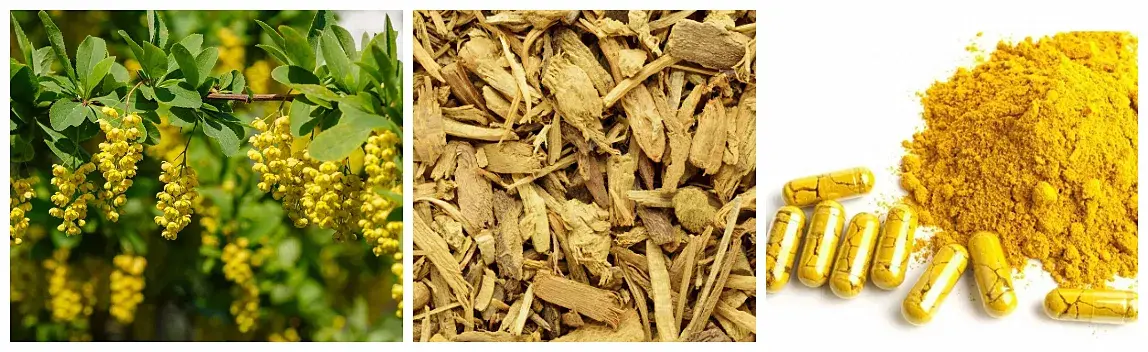
Berberine has become one of the most discussed botanical actives in the global supplement market. As the science around metabolic health, gut balance, and healthy blood lipids continues to grow, more brands are planning berberine launches or upgrading existing formulas. Yet as soon as product developers start sourcing, a key question appears: should you choose berberine phytosome, or focus on berberine HCL?
What Are They?
Berberine as a Botanical Active
Berberine is an isoquinoline alkaloid found in several traditional medicinal plants, including Berberis aristata, Coptis chinensis (goldthread), and Phellodendron species. It has been studied for decades in Asia and the West. Modern research explores its role in helping maintain healthy blood glucose, lipid balance, and a stable inflammatory profile, always as part of a holistic lifestyle.
In supplements, berberine is usually supplied as a purified salt rather than as crude plant powder. The most common salt is berberine hydrochloride, often simply called berberine hcl. It offers high purity, well-known analytical methods, and relatively consistent regulatory acceptance in many markets.
What Is Berberine HCL?
Berberine HCL is hydrochloric acid-bound berberine that is more stable and soluble in water. This facilitates testing, standardization, and formulation. According to HPLC, typical commercial samples have a brilliant yellow hue that is typical of this alkaloid and purity levels of 97–98% berberine.
Berberine HCl encounters natural obstacles in the stomach, such as low membrane permeability and active efflux, because it dissolves readily in water but is not extremely lipophilic. Because of this fact, it is thought to have a limited oral bioavailability. Nevertheless, significant physiological support has been shown in human investigations with conventional dosages, indicating that limited bioavailability does not equate to no action. It does need formulators to consider dosage, shape, and combination tactics carefully.
What Is Berberine Phytosome?
Berberine phytosome is a more recent formulation concept. The basic idea comes from phospholipid complexes: berberine molecules are combined with phospholipids, usually phosphatidylcholine from soy or sunflower. This creates a structure that behaves more like a little lipid vesicle. The goal is to help berberine cross intestinal membranes more easily and to reduce the impact of efflux pumps.
In comparison to normal berberine hcl, a number of branded berberine phytosome products have been produced, some of which promise much greater absorption and lower necessary dosages. Although data sets are still more constrained than for the traditional HCL salt, typical clinical trials from these brands demonstrate better plasma levels of berberine at lower dosages.
Berberine phytosome is not a novel molecule in terms of basic materials. It is a delivery method that modifies absorption properties by using process technology and food-grade phospholipids. This distinction is important for both regulatory categorization and the way you promote the component in final products.
Core Differences
Absorption and Bioavailability
Most buyers land on this comparison because of bioavailability. Standard berberine hcl has been shown in pharmacokinetic studies to have low plasma concentrations after oral ingestion. Factors include poor intestinal permeability and extensive first-pass metabolism. Despite that, clinical trials using doses of 900–1500 mg per day (divided) have reported support for healthy blood sugar and lipid parameters in adults, indicating that useful activity still occurs in the gut and liver.
Phytosome formulations aim to solve part of this challenge. By embedding berberine into a phospholipid complex, developers try to create a more lipophilic system that passes through cell membranes more readily. Some published trials on branded berberine phytosome products describe improved absorption and similar physiological effects at lower daily doses compared with high-dose berberine HCL. However, comparisons across studies must be done carefully, since designs, populations, and endpoints often differ.
Composition and Excipients
Berberine HCL is, by nature, a simple ingredient: a single alkaloid salt, usually standardized by HPLC. That simplicity supports clear labels and straightforward quality control. The excipients in final dosage forms are chosen by the brand, not “built in” to the ingredient.
Berberine phytosome, in contrast, is a composite material. It contains berberine plus phospholipids and sometimes additional carriers. This composite structure is what improves absorption, yet it also means that the technical data sheet includes several components. For formulators working in clean-label or allergen-conscious spaces, the source of phospholipids (soy vs sunflower) and any auxiliary materials must be examined closely.
If your brand emphasizes minimal excipients and botanical purity, berberine hcl offers a more direct fit. If you prioritize delivery technology and are comfortable explaining a multicomponent complex, a phytosome format may match your positioning better.
Dosage Strategies and Consumer Experience
When formulating with berberine HCL, brands often use doses of 300–500 mg per capsule or tablet, taken two or three times daily with meals. This pattern is based on many clinical trials using high total daily intake. The result can be rather large tablets or multi-capsule servings, which some consumers accept and others resist.
Phytosome forms may allow lower nominal doses, which can lead to smaller capsules or once- or twice-daily serving patterns. This can improve adherence and perceived convenience, especially for consumers who already take multiple supplements.
However, the taste and color profile of berberine does not vanish. Both of them are intensely yellow and quite bitter. Formulators who move into powders, beverages, or chewables must still address flavor masking and appearance. Encapsulation can hide bitterness reasonably well for standard berberine hcl, which is already used widely in capsules and tablets.
Cost, Supply, and Scalability
From a supply-chain angle, berberine hcl has a long track record. Production methods are standardized, and many audited factories exist, especially in China and parts of Asia. That has helped keep costs competitive and supply stable for global brands.
Phytosome berberine, on the other hand, is usually offered as a branded ingredient with proprietary technology. This tends to raise the price per kilogram, although the lower dose per serving can offset part of the cost at the finished product level. Supply is linked to fewer manufacturers and sometimes to exclusive agreements, which can be a strength for differentiation but a risk if you need flexible sourcing.
If your project targets mass channels where price sensitivity is high, berberine hcl often remains the first choice. For premium lines that highlight advanced delivery systems and accept higher retail price points, phytosome formats can support a differentiated story.
How to Choose: Which Is Right for You?
Clarify Your Product Positioning and Target User
The correct berberine format depends first on how you position your brand. If you are designing a high-volume product for broad distribution, where affordability and regulatory simplicity matter most, berberine hcl is usually the most rational starting point. It provides high purity, robust analytical support, and flexible dosing options.
If you focus on premium, science-driven products and plan to spotlight “enhanced absorption” or “advanced delivery system” on your packaging, investing in a phytosome form can align with that story. Consumers in specialist channels may be willing to pay more for that promise, especially if your marketing team can translate the technical story into clear, simple language.
Formulation Format and Technical Constraints
Your intended dosage form will also steer the decision. For standard capsules and tablets, berberine hcl integrates smoothly and gives you wide freedom in excipient and coating design. It works in combination formulas with other botanicals, minerals, or vitamins aimed at metabolic and cardiovascular support.
For powders meant for direct oral consumption, such as stick packs or drink mixes, both forms require skillful flavor work, yet a phytosome sometimes offers better dispersibility in fat-containing matrices. Nevertheless, many brands prefer the predictability and cost structure of berberine hcl, then invest in taste-masking systems at the formulation stage.
Supply Partner and Quality Assurance
Whichever format you select, the quality of the supplier directly shapes your risk profile. For berberine hcl in particular, consistency of purity, residual solvent control, and heavy metal limits are non-negotiable. Third-party certifications and compliance with EU and U.S. standards help ensure that every batch fits global trade requirements.
You also need technical support: specification sheets, validation methods, stability data in common dosage forms, and regulatory dossiers when requested by local authorities. A supplier with integrated R&D, manufacturing, and global trade experience can shorten development cycles and reduce the time between idea and commercial launch.
Berberine HCL Supplier: Hancuikang
For brands that decide to build their berberine platform on a stable, high-purity ingredient, a dependable supplier is essential. Hancuikang supplies berberine HCL standardized to 97–98% purity by HPLC, offering a consistent, analytical-quality grade that fits demanding dietary supplement and functional health product applications. The material appears as a yellow fine powder, which reflects the natural chromophore of the berberine molecule and makes visual inspection straightforward during incoming quality checks.
The solubility profile of Hancuikang’s berberine HCL aligns well with conventional formulation approaches. It is soluble in water, which supports use in tablets, capsules, and certain functional beverage bases, yet it remains insoluble in common organic solvents such as benzene, ether, and chloroform. This behavior helps formulators design processes around aqueous granulation and coating, while analytical teams can rely on standard HPLC methods for routine batch verification.
To support different project scales, Hancuikang offers flexible packaging. Small-batch development and pilot work can use 1 kg foil bags, which protect the powder from moisture and light. Commercial production runs can draw on 20 kg fiber drums with inner liners, allowing efficient storage, handling, and transport. This packaging structure helps maintain stability while fitting common warehouse systems and global freight practices.
If you are planning or upgrading a berberine project and need a reliable berberine hcl ingredient with clear specifications, stable quality, and strong technical backing, you are welcome to contact Hancuikang. Share your formulation goals, target markets, and regulatory needs by emailing fxu45118@gmail.com. A professional team will respond with detailed COAs, technical data, samples, and tailored recommendations so you can move from concept to commercial launch with confidence and speed.
FAQs
Q1: Is berberine HCL less effective than berberine phytosome?
A: Effectiveness depends on many factors, not just absorption. Berberine HCL has been used in numerous human studies at relatively high doses and has shown support for healthy blood sugar and lipid profiles when used with diet and lifestyle measures. Phytosome forms may reach higher plasma levels at lower doses, according to some branded studies. However, those data sets are smaller, and study designs differ. For brands, the decision is less about “better or worse” in absolute terms and more about matching dose, cost, and brand story to the expectations of the target market.
Q2: Can I use both berberine HCL and berberine phytosome in the same product line?
A: Yes. Many brand owners design a tiered portfolio. They use berberine hcl in core, cost-effective products, often in combination formulas. Then they launch a separate, premium SKU featuring berberine phytosome as a hero ingredient, sometimes at a lower dose and higher price point. The key is clear differentiation in labeling and communication, so consumers understand why products differ in composition, serving size, and price. At the raw-material level, you will want consistent specification management and clear separation of SKUs in your ERP and quality systems.
References
- Derosa, G., & Maffioli, P. (2012). Effects of berberine on metabolic parameters: A review of clinical studies. Clinical Lipidology, 7(5), 567–576.
- Marinangeli, C. P. F., et al. (2020). Berberine: A review of pharmacokinetics, metabolism, and clinical evidence. Phytomedicine.
- Kong, W., et al. (2004). Berberine is a novel cholesterol-lowering drug working through a unique mechanism distinct from statins. Nature Medicine, 10, 1344–1351.
- Official websites and technical white papers of branded berberine phytosome ingredients (accessed via Google search for “Berberine Phytosome vs Berberine HCl” and related terms).
- Market analyses and trend reports on berberine supplements, bioavailability-enhanced botanicals, and phospholipid complexes from industry publications such as Nutrition Business Journal and supplier white papers.