
Does yohimbine give you energy?
2025-12-25 14:43:16
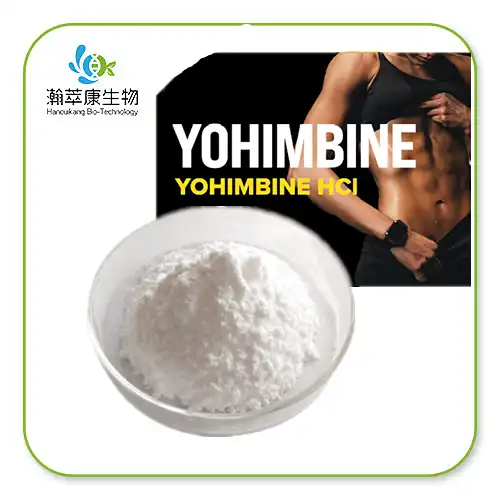
The inquiry into the stimulating effects of yohimbine hydrochloride is frequent, particularly within the dietary supplement industry. Formulators often seek ingredients that enhance user experience by promoting alertness or vigor. Yohimbine, derived from the bark of the African Pausinystalia yohimbe tree, is well-known for its effects on the body’s internal chemical signaling. However, describing this effect merely as "energy" might misrepresent its complex action. To integrate this ingredient responsibly, B2B buyers must understand precisely how it influences alertness versus raw physical stamina.
Why Yohimbine May Boost Energy (Mechanism)?
The perceived energy lift from yohimbine is a direct consequence of its interaction with the nervous system, rather than a simple fuel source enhancement. This mechanism is distinct from many common energy promoters currently on the market.
Mechanism of Action Defined
Yohimbine functions primarily as an alpha-2 adrenergic antagonist. This classification sounds complex, but its impact is straightforward in function. Alpha-2 receptors are present throughout the body. They serve a crucial role: acting as the system's built-in "brakes." These receptors normally regulate and suppress the release of key stimulatory compounds. Blocking these inhibitory receptors removes the natural dampening effect.
Norepinephrine Release Enhancement
When these alpha-2 "brakes" are blocked by yohimbine, the body’s natural capacity to release norepinephrine increases significantly. Norepinephrine, acting as both a hormone and a neurotransmitter, is central to arousal, vigilance, and the sympathetic nervous system's "fight-or-flight" readiness. Higher circulating levels of this catecholamine naturally result in heightened awareness and focus. This elevated mental state is what individuals interpret as an "energy" boost.
Indirect Energy Pathway
It is important to differentiate this from direct energy metabolism support. Unlike caffeine, which operates by blocking adenosine receptors—the chemical signaling drowsiness—yohimbine works upstream by amplifying alertness chemicals. Therefore, the energy derived from yohimbine hydrochloride is fundamentally rooted in increased central nervous system arousal and focus, rather than providing immediate metabolic fuel.
How the "Energy" Feels (vs. Caffeine)
Formulators must manage consumer expectations regarding stimulant profiles. The subjective feeling produced by yohimbine differs noticeably from the powerful, often rapid onset associated with high-dose caffeine or synthetic pre-workouts. Communicating this nuance is key to user satisfaction.
Mental Over Physical Focus
Yohimbine's main documented benefit is improved cognitive function. Users frequently report feeling more alert, concentrated, and less susceptible to mental exhaustion. It encourages a condition of increased preparedness. However, this usually does not result in a significant improvement in muscle power or raw physical stamina, which is the usual objective of workout boosters. It makes a significant contribution to mental acuity.
Managing the Jitters Factor
Unwanted side effects of many caffeine-based stimulants include bodily trembling or "jitters." The energy produced by yohimbine hydrochloride is frequently described as smoother and less startling at suitable low doses. It can offer prolonged alertness without the severe overstimulation of the peripheral nervous system that comes with too much caffeine. Individual sensitivity, however, is crucial in this situation.
The Anxiety Component
The possibility of anxiousness is a crucial factor for formulators. Yohimbine increases norepinephrine, which can have negative effects on people who are already prone to anxiety or who are extremely sensitive to stimulants. This could show itself as palpitations, agitation, or restlessness. This elevated state is more akin to "nervous energy" than focused, productive awareness. Maintaining users on the positive end of this range requires careful dosage management.
Key Factors That Influence the Energy Response
The subjective feeling of an "energy boost" is highly variable and depends on several interlocking physiological and administrative factors. Buyers must account for these variables when determining the appropriate material specifications for their intended supplement end-use.
Dosage Precision
The most direct control over the observed impact is exerted by dosage. For overall alertness, standard recommended values are fairly low. Yohimbine hydrochloride dosages between 0.2 and 0.3 mg per kilogram of body weight are typically regarded as effective. This corresponds to a small window, maybe 5–10 mg, for the typical adult. Any perceived energy benefit is overshadowed by the potential of negative effects, such as higher heart rate or severe anxiety, when moving beyond this range.
Individual Tolerance and Baseline State
Not every body responds identically to adrenergic stimulation. Individuals who naturally operate with lower baseline norepinephrine levels, perhaps those experiencing generalized fatigue syndromes, often report a more significant and noticeable lift in energy and mood. Conversely, individuals with pre-existing conditions like hypertension or high baseline anxiety levels are more likely to feel overstimulated rather than energized. Formulators must acknowledge this physiological variance.
Timing and Stomach Contents
The timing of intake relative to food significantly modifies absorption kinetics. When yohimbine hydrochloride is taken on an empty stomach, absorption is rapid and potent. Some users intentionally employ this for enhanced lipolytic activity, but this method also amplifies the stimulant effects quickly. Effects generally peak within one to two hours post-ingestion and can maintain noticeable action for four to six hours. This duration is important for timing supplement recommendations.
Primary Use Context
It is crucial to remember that yohimbine’s most established and researched applications often center on other physiological goals. Its use in supporting sexual function or aiding in increasing lipolysis (fat mobilization) remains prominent. In these scenarios, the enhanced alertness is often considered a secondary, welcome benefit rather than the primary advertised effect of the supplement.
Yohimbine Hydrochloride Supplier: Hancuikang
To successfully market supplements relying on precise neurological modulation, you require yohimbine hydrochloride standardized for exceptional purity and documented consistency. Hancuikang is committed to providing active pharmaceutical ingredients and supplement extracts that meet the highest global benchmarks for quality and reliability.
We deliver a superior product. The active ingredient is pure Yohimbine. It presents with a slightly fragrant odor, characterized by a bitter and slightly astringent profile. Regarding solubility, it is easily soluble in chloroform, soluble in methanol and ethanol, and only slightly soluble in water. The product properties are defined as white crystalline powder with a slightly bitter taste. We offer high specifications, including 98% purity (our primary offering), alongside 8% concentration and 10:1 ratio extraction options.
We export to over 50 countries, with significant export ratios between 71% and 90%. We also offer personalized R&D services to help adapt formulas to specific consumption scenarios. If your next product requires highly pure, consistently standardized yohimbine hydrochloride, contact Hancuikang for a guaranteed partnership. Please direct all inquiries and requests for samples to fxu45118@gmail.com.
FAQs
Q1: Is yohimbine generally considered a strong stimulant like ephedrine?
A: Yohimbine stimulates the adrenergic system but typically less intensely than potent sympathomimetics like ephedrine. Its effect is primarily focused on alertness and appetite modulation rather than raw physical power output.
Q2: How should supplement manufacturers address the anxiety side effect?
A: Manufacturers should clearly communicate conservative dosing guidelines on labels and consider pairing the ingredient with calming agents like L-theanine to promote smoother mental effects.
Q3: Does the energy boost from yohimbine improve workout performance?
A: While it may reduce the perception of fatigue, which can encourage training, its primary mechanism is centralized alertness, not necessarily a direct enhancement of maximal strength or endurance capacity.
Q4: What is the key difference in how yohimbine and caffeine function?
A: Caffeine blocks the chemical that makes you sleepy (adenosine), whereas yohimbine releases the chemical that makes you alert (norepinephrine) by disabling its natural brakes (alpha-2 receptors).
References
- Pharmacology texts detailing the role of alpha-2 adrenergic receptors as negative feedback regulators in the sympathetic nervous system.
- Clinical reviews discussing the acute physiological effects of norepinephrine elevation, including arousal, focus, and cardiovascular changes.
- Comparative pharmacological studies contrasting the mechanisms of action between caffeine (adenosine antagonism) and yohimbine (alpha-2 antagonism).
- Research papers outlining typical effective dosage ranges for yohimbine in human studies focusing on metabolism and alertness.
- Analytical chemistry literature confirming the typical solubility characteristics and crystalline structure of yohimbine hydrochloride salt.