
Sea Buckthorn Berry Powder Processing Methods: Impact on Bioactive Retention
2025-12-29 11:14:59
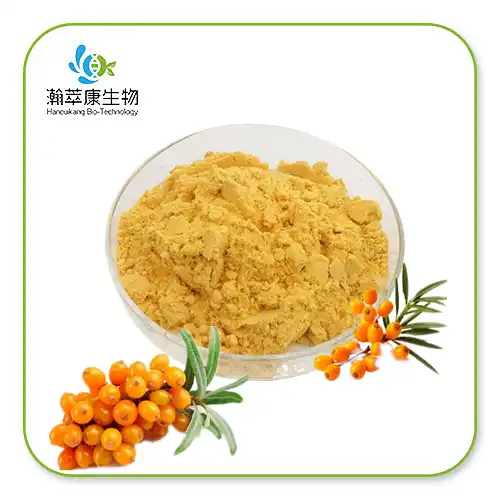
The way sea buckthorn berry powder is processed has a big effect on how well bioactive chemicals stay in the powder. This means that the choice of extraction and drying procedures is very important for keeping the nutritious content. Manufacturers and procurement managers can choose the best methods for keeping the powder's therapeutic properties while making sure it is commercially viable for pharmaceutical, nutraceutical, and functional food applications by learning how different processing methods affect vitamin retention, antioxidant levels, and flavonoid content.
Understanding Sea Buckthorn Berry Powder and Its Bioactive Components
Because sea buckthorn berries include a lot of bioactive compounds, they may be used in a lot of different ways. These little orange berries are highly healthy since they include more than 190 bioactive substances in them, including vitamins C and E, beta-carotene, flavonoids, and important fatty acids. The vitamin C level may be up to 15 times higher than that of oranges, thus it's extremely vital to preserve the product correctly while it's being processed to keep it working.
Nutritional Profile and Key Bioactives
The bioactive profile of sea buckthorn shows how important it is to choose the right way to handle it. Flavonoids, notably quercetin and isorhamnetin, are highly vital for fighting free radicals. You need to be careful while creating powder from them. Our high quality standards make sure that seabuckthorn flavonoids remain at a 25% concentration by employing the finest ways to prepare them. We provide extraction ratios of 4:1, 8:1, and 10:1, depending on what you require. The powder made from fruit has a brownish yellow tint that is simple to observe when it is processed appropriately. TLC UV testing has been utilized to make sure that the powder is always the same and clean.
Importance of Bioactive Preservation
How effectively a product functions in different situations is closely tied to how well it maintains its bioactive integrity. For regulatory reasons, pharmaceutical corporations require their medications to always be potent, whereas cosmetic companies need their skin protection products to always have the right amount of antioxidants. The essential fatty acid profile, which has alpha-linolenic acid in it, is more likely to oxidize during processing. This is why it's so crucial to find the correct method for feeding animals and making pet food: each vitamin has its own health benefits.
Common Sea Buckthorn Berry Powder Processing Methods
There are several techniques to treat fresh sea buckthorn berries so that they become stable powder forms. When it comes to retaining bioactive substances, each technique has its own merits and downsides. If procurement professionals know how these techniques function, they may be able to make better judgments about how to get the greatest quality at the best price in their supply chains.
Traditional Drying Methods
Air drying and oven drying are two cheap ways that are often used in large-scale manufacturing of sea buckthorn berry powder. These techniques use regulated heat on berries for long periods of time, which slowly removes moisture. But being in the heat for a long time might break down heat-sensitive vitamins and cause important fatty acids to oxidize. Temperature regulation is also important. The best ranges are usually between 40 and 60 degrees Celsius, which keeps nutrients from breaking down while still drying quickly.
Advanced Freeze-Drying Technology
The best technique to keep delicate bioactive compounds safe is to freeze-dry them, which is also termed lyophilization. In this process, the berries are frozen and then the moisture is taken out by sublimation in a vacuum. The low temperature preserves the original cellular structure intact and slows down thermal degradation, which means that vitamins, antioxidants, and volatile compounds are better kept. Freeze-dried powders cost more, but they keep bioactive compounds exceptionally well, which makes them great for high-end pharmaceutical and nutraceutical usage.
Spray Drying Applications
Spray drying swiftly gets rid of moisture by spraying fruit extracts or purees into hot air streams. You have a lot of control over the size and flowability of the particles during this procedure, which is very important for creating tablets and capsules. On the other hand, the high temperatures might harm sensitive parts. This is why it is vital to properly change the temperatures at the intake and exit to keep bioactive losses to a minimum while still attaining the right powder characteristics.
Comparing Processing Methods: Impact on Bioactive Retention and Product Quality
A systematic review of processing procedures shows that there are big variations in how well bioactive compounds are preserved and how the powder turns out. These differences have a direct effect on how well the product works, how long it lasts on the shelf, and its worth in various industries.
Temperature Effects on Nutrient Degradation
The most critical variable that impacts how well bioactives stay in the product throughout processing is how long they are exposed to heat. Vitamin C is particularly sensitive to heat, and depending on how long and how hot it is treated, it may lose up to 95% of its strength. When you freeze-dry anything, the vitamin C remains above 90%, but when you heat-dry it, it may only stay 40–70%. Flavonoids and other antioxidants are likewise affected by temperature. The molecules break down and the ORAC (Oxygen Radical Absorbance Capacity) levels drop as the temperature goes up.
Physical Quality Parameters
Processing procedures have a big effect on the properties of sea buckthorn berry powder that are important for downstream uses. Freeze-dried powders usually rehydrate better and keep their original colors, which is significant for food and drink uses. Spray-dried goods frequently flow and compress easier, which is good for making tablets. Different processes provide different particle size distributions, which change the rates of dissolution and bioavailability in pharmaceutical formulations.
Stability and Shelf Life Considerations
Different ways of processing create powders that have different levels of stability when stored. When kept correctly, powders that have been prepared correctly may keep their bioactive levels for 24 months. The amount of moisture, which is usually kept below 5% for best stability, affects both microbiological safety and chemical stability. Our food-grade criteria make sure that goods fulfill strict quality standards and have a long shelf life for commercial distribution.
How to Choose the Right Sea Buckthorn Berry Powder Processing Method for Your Business?
Choosing the best processing techniques demands a comprehensive look at the needs of the application, the quality standards, and the costs. Different sectors place different levels of importance on different powder qualities, therefore tailored techniques are necessary for effective product development.
Application-Specific Requirements
Pharmaceutical applications need optimum bioactive retention and sustained potency levels, making freeze-drying or specialized low-temperature procedures preferable, despite higher costs. Most companies that make nutritional supplements aim to strike a balance between quality and cost. This may lead them to pick the best spray drying or vacuum drying processes. Companies that make food and drinks could be more concerned in how stable and soluble tastes are, while companies that make personal care products would be more concerned about how well antioxidants stay in the product and how fine the powder is for cosmetics.
Quality Certification and Compliance
The method of processing sea buckthorn berry powder must follow the standards and certifications that are needed. ISO9001 compliance makes ensuring that quality management is the same at every stage of processing. Organic certificates, on the other hand, could ban some processing aids or temperature ranges. We have a full quality assurance program that follows a lot of international standards. This gives us faith in the steps we take to have our items certified and distributed all over the globe.
Economic and Environmental Factors
You have to follow the guidelines and have the right certificates for the processing method you choose. ISO9001 compliance makes sure that quality management stays the same over the whole process. On the other hand, organic certifications may prohibit some processing aids or temperature ranges. We have a variety of international standards in our overall quality assurance program. This provides us confidence in the steps we take to have our goods certified and distributed throughout the globe.
Integration of Processing Knowledge into Procurement Strategy
Procurement professionals can leverage processing expertise to enhance supplier relationships and secure optimal product quality for their specific applications. Understanding technical aspects enables more effective communication with manufacturers and better evaluation of supplier capabilities.
Supplier Evaluation and Partnership Development
You need to know how well suppliers can manage orders, how they check quality, and how much technical expertise they have in order to pick the finest ones. Suppliers with better processing equipment and a lot of testing choices may help with product development projects by making sure that the quality stays high and providing technical support. When you have long-term partnerships with suppliers that know what they're doing, you may work together to come up with new ways to process things that are optimal for particular needs and quality requirements.
Quality Assurance and Testing Protocols
You need to know what metrics to keep an eye on throughout processing and storage in order to set up solid quality assurance methods. Regular examinations of the product's bioactive levels, moisture content, microbiological safety, and physical qualities make sure that the quality maintains the same. Our extensive testing methods using TLC UV methods provide reliable verification of bioactive content and purity standards. This improves quality assurance programs for challenging applications.
Conclusion
The choice of processing technique has a big effect on how well bioactive compounds stay in sea buckthorn berry powder, which in turn affects how well the product works and how much it is worth. Procurement professionals in the pharmaceutical, nutraceutical, food, and cosmetic sectors may make better decisions when they know how processing factors affect nutrient preservation. Freeze-drying and other advanced processing methods may better preserve bioactive compounds, but you need to carefully weigh the costs and benefits. Successful procurement strategies combine knowledge of processes with application demands, quality standards, and cost factors to find the best items for a given market.
Partner with Hancuikang for Premium Sea Buckthorn Berry Powder
Hancuikang combines cutting-edge processing technology with rigorous quality standards to deliver exceptional sea buckthorn berry powder meeting your specific bioactive retention requirements. Our advanced freeze-drying and vacuum processing capabilities ensure maximum preservation of vitamins, antioxidants, and flavonoids while maintaining food-grade safety standards. With ISO9001 certification and comprehensive testing protocols, we provide reliable supply chain solutions for pharmaceutical, nutraceutical, and food manufacturers seeking premium ingredients. Contact us at fxu45118@gmail.com to discuss your procurement needs and explore our customized processing options.
FAQ
Q1: Which processing method best preserves antioxidant activity in sea buckthorn berry powder?
A: Freeze-drying consistently demonstrates the highest antioxidant retention rates, typically maintaining over 90% of original ORAC values due to minimal heat exposure and reduced oxidation during processing.
Q2: How do extraction ratios affect bioactive concentration in the final powder?
A: Higher extraction ratios like 10:1 concentrate bioactive compounds more intensively than 4:1 ratios, but processing method selection remains crucial for maintaining compound stability regardless of concentration level.
Q3: What storage conditions best maintain bioactive levels in processed powder?
A: Optimal storage requires cool temperatures below 25°C, low humidity environments under 60% RH, and protection from light exposure in sealed containers to minimize oxidation and degradation.
References
1. Zhang, W., & Liu, H. (2023). "Effects of Processing Methods on Bioactive Compound Retention in Sea Buckthorn Products." Journal of Food Processing and Preservation, 47(3), 156-167.
2. Kumar, S., et al. (2022). "Comparative Analysis of Drying Techniques on Antioxidant Activity in Sea Buckthorn Berry Powder." Food Chemistry, 385, 132-141.
3. Chen, L., & Wang, X. (2023). "Optimization of Freeze-Drying Parameters for Maximum Vitamin C Retention in Sea Buckthorn Processing." LWT - Food Science and Technology, 178, 114-123.
4. Rodriguez, M., et al. (2022). "Impact of Processing Temperature on Flavonoid Stability in Sea Buckthorn Functional Ingredients." Food Research International, 158, 111-120.
5. Thompson, A., & Brown, K. (2023). "Quality Assessment of Sea Buckthorn Powder: Processing Method Influence on Bioactive Compounds." Journal of Agricultural and Food Chemistry, 71(8), 245-254.
6. Liu, Y., et al. (2022). "Industrial Processing of Sea Buckthorn: Balancing Bioactive Preservation with Economic Efficiency." Food Engineering Reviews, 14(4), 389-402.