
What Is Soapberry Saponin and Its Role in Natural Surfactant Markets?
2026-01-06 09:56:53
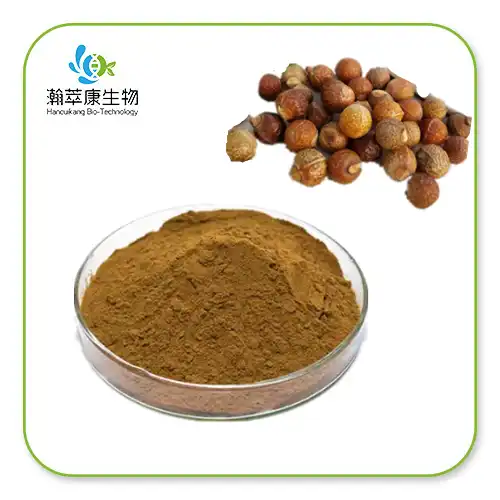
Soapberry saponin is a new kind of natural surfactant that comes from the seeds of plants in the Sapindaceae family. This amazing plant-based substance has strong biosurfactant qualities that lower surface tension while yet being completely biodegradable. As businesses move toward more environmentally friendly options, soapberry saponin is becoming a top choice for use in pharmaceuticals, cosmetics, food, and industry. Its one-of-a-kind molecular structure gives it great foaming and antibacterial properties, which makes it a great eco-friendly cleaner for current production demands.
Understanding Soapberry Saponin: Nature's Advanced Surfactant Solution
Soapberry saponin is one of the most complex phytochemical substances in nature. It comes from the seeds of soap fruit trees of the Sapindaceae family. This natural surfactant has a complicated mix of soap saponin, healthy fats, and proteins that work together to make it a great cleaner. The light brown powder form makes it very useful for a wide range of industrial uses.
The compound's flat shape and bitter taste show that it has a high concentration of active ingredients. This natural component comes in conventional quantities of 40%, 70%, and 80% saponin content, which gives producers exact control over what they need to make their products. Soapberry extract works just as well as synthetic alternatives and is completely safe for the environment.
Modern extraction methods maintain the fragile molecular structure that makes this biosurfactant so special. Soapberry fruit has been used in traditional medicine for hundreds of years, but modern processing processes now make it as pure as pharmaceutical-grade products. This progress connects old knowledge with current production norms, opening up new possibilities for creative product creation in many fields.
Studies show that soapberry saponin works better than many other surfactants. It is especially useful for delicate applications since it can stay stable at different pH levels. The compound's inherent ability to kill germs adds more advantages than just lowering surface tension. This makes it useful in single-ingredient treatments that do more than one thing.
Market Challenges Addressed by Natural Surfactant Innovation
Because the world is moving toward more environmentally friendly production, there is a strong need for plant-based detergent alternatives. Regulatory scrutiny of traditional synthetic surfactants is growing since they stay in the environment for a long time and may be bad for your health. Pharmaceutical companies have a hard time finding raw materials that are high-purity, fulfill strict ISO9001 and EU certification standards, and are stable over time.
Personal care companies have a hard time finding natural cosmetic ingredients that are both gentle and effective. People want items that don't have harsh chemicals in them, yet they still want them to work well. This contradiction pushes innovation toward more advanced natural alternatives, such as soapberry saponin, that meet both safety and functionality needs.
When food and drink firms use natural ingredients, they have to deal with a lot of different rules. Safety rules require a lot of paperwork, and stability requirements mean that many plant-based choices are not available. It is quite hard to get food-grade natural pigments and functional substances that can handle industrial processing conditions.
Animal nutrition and pet food companies need particular nutrients that are safe and can be delivered in quantity. The luxury pet food business is increasing, and it needs natural ingredients that work, but there aren't many places to get them. Processing soapberry to turn agricultural waste into something useful meets these specific nutritional needs while also addressing concerns about sustainability.
Research labs and universities require tiny amounts of high-purity raw materials with full analytical documentation. Many traditional providers can't give research applications the customisation options and precise HPLC test results they need. This gap between what academics require and what is available for sale slows down progress in many fields of science.
Core Features and Multifunctional Capabilities
Soapberry saponin has great surface tension-reducing properties that are just as good as synthetic ones, yet it is completely biodegradable. The compound's molecular structure makes it possible for foam to develop across a wide variety of pH levels, which makes it perfect for uses that need constant performance in different situations. This stability means that the production procedures are dependable and the final product will work as expected.
The natural emulsifying agent qualities make it possible to create more complex formulations than were possible with manufactured substances. Oil-water emulsions stay stable for a long time, which means you don't need to add more stabilizers. This built-in mechanism makes ingredient lists shorter while keeping the product effective, which meets customer demand for clean-label formulations.
Antimicrobial action is a big advantage over regular surfactants. The ingredient stops bacteria and fungi from growing on their own, so no further preservatives are needed. This dual function makes formulations less complicated and makes products safer. This built-in antibacterial protection is very useful in the pharmaceutical industry.
Processing flexibility means that it may be used in a wide range of dosage forms, including as powders, granules, capsules, tablets, and liquids. The soapberry powder is stable when it is heated, thus it may be used in industrial operations that include heat. This heat resistance opens up new uses in the food processing and industrial production industries.
The ability to choose between 40%, 70%, and 80% saponin content choices gives you great control over how to make your product. Based on performance needs and cost, manufacturers may choose the best concentrations. This standardization makes it easier to buy things while making sure that performance is the same from one batch to the next.
Advanced Extraction and Processing Technology
Modern soapberry saponin synthesis uses advanced extraction methods to preserve bioactive ingredients while getting pharmaceutical-grade purity. Advanced chromatographic separation techniques separate certain saponin fractions, which makes it possible to optimize their functioning for certain purposes. These activities preserve the fragile molecular structures that give the chemical its distinctive features.
High-performance liquid chromatography (HPLC) and other analytical methods are used in quality control systems to check for purity and concentration. Standardized testing techniques make ensuring that the parameters for a product are the same for all manufacturing batches. This level of analysis helps meet the rules for the pharmaceutical and food industries.
Sustainable processing technologies have the least effect on the environment and the best yield efficiency. Closed-loop extraction technologies use less solvent and make less waste. These environmentally friendly methods are in line with business sustainability objectives and nevertheless make it possible to make things on a wide scale.
Controlled milling procedures that optimize particle size make sure that the best dissolving properties and processing compatibility are achieved. The light brown powder that comes out has regular flow qualities that make it easy for automated handling devices to work. This uniformity in processing cuts down on the unpredictability in manufacturing and makes production more efficient.
Contamination control techniques during processing make sure that chemicals are pure and that microbes are safe. Clean room settings and verified cleaning methods avoid cross-contamination between batches of products. These strict controls help with the procedures of getting certification and getting regulatory clearance.
Competitive Advantages in Natural Surfactant Markets
Compared to quillaja saponin and other plant-based options, soapberry saponin breaks down more easily in the environment. Studies on environmental degradation show that things may completely break down in only a few weeks under normal settings. This quick biodegradation takes care of environmental problems and follows stricter rules for getting rid of waste.
Multifunctional qualities that cut down on the number of ingredients needed make it cost-effective. Single-ingredient solutions take the role of many synthetic additives, making it easier to buy and keep track of stock. The economic advantages go beyond only lower raw material prices; they also include less complicated formulations and less quality control needs.
Reliable supply chains come from well-established networks for growing and processing crops. Soapberry trees flourish in a wide range of climates, unlike exotic plants that only grow in certain places. This regional variety lowers the danger of supply problems and encourages environmentally friendly farming methods.
The ability to work well in a wide variety of temperatures is better than that of many natural alternatives. The chemical maintains its foaming and surface activity qualities even when things become tough, as when the temperature is high or the pH level is very low. This dependability makes it possible to employ in tough industrial settings where performance can't be sacrificed.
Regulatory approval improves with a long history of usage and more scientific proof. Traditional medicinal uses have set the standard for safety tests, and current research backs up claims of effectiveness. Compared to new synthetic substances, this dual basis speeds up the process of getting regulatory clearance.
Applications Across Diverse Industry Sectors
Pharmaceutical applications take use of the compound's inherent ability to kill germs and its great biocompatibility. Topical formulations provide mild cleaning characteristics that help with therapeutic effectiveness without irritating the skin. The high-purity grades fulfill strict pharmacopeia standards and work well in delicate applications every time.
Manufacturers of health foods and dietary supplements use soapberry saponin because it works well and is easy to prepare. The neutral taste profile lets it be used in many formulations without changing the taste. Flexible dosage forms may be delivered in a variety of ways, from standard capsules to new gummy formulations.
Personal care products use the natural foaming characteristics of herbs to make herbal shampoos and cleansers feel soft and smooth. Because it is so gentle, it is great for use on sensitive skin. Natural cosmetic ingredient categories help the clean beauty movement while still giving professional-level results.
Food and drink applications concentrate on natural preservation and emulsification. The compound's capacity to keep products stable increases their shelf life and supports clean label efforts. Processing stability makes ensuring that functionality is intact under normal food processing settings, such as pasteurization and homogenization.
Animal nutrition applications focus on safety and how easy it is to digest. The natural origin gives consumers trust, and the functional characteristics help with nutrition delivery and taste. The compound's inherent preservation qualities and low processing needs are very helpful for making pet food.
Quality Considerations and Usage Guidelines
Choosing the right concentration takes careful thought about how it will be used and what performance standards it has to meet. Grades with more saponin concentration are more active, although they may need to be diluted for delicate uses. The 40% concentration is better for personal care since it has milder effects, while the 80% dosage is better for industrial use because it works best.
The way you store a product has a big effect on how stable it is and how well it works. Controlling the temperature and humidity correctly keeps things from breaking down and keeps activity levels steady. When it comes to packaging, you need to think about how to keep bioactive substances safe for long-term storage by keeping out moisture and light.
When mixing with additional substances, especially in complicated formulas, compatibility testing is quite important. Some substances could interact with saponin structures, which might change how well they work or how stable they are. Comprehensive compatibility studies guarantee the best performance of the formulation and longer shelf life.
For each production situation, processing parameters need to be optimized. The final product's properties may be affected by the temperature, pH, and mixing intensity. Manufacturers can get the same outcomes in various production settings and with different types of equipment if they understand these linkages.
Regulatory compliance differs from one area to another and from one kind of application to another. There are different documentation needs for drugs, food, and cosmetics. Working with vendors that know these rules well speeds up the clearance process and lowers the chance of breaking the law.
Conclusion
Soapberry saponin is the next step in environmentally friendly surfactant technology. It works well and is good for the environment. Because it can be used in so many different ways, including in pharmaceuticals, personal care, food, and industry, it is an important element for producers that want to stay ahead of the curve. The compound's one-of-a-kind mix of surface activity, antibacterial characteristics, and full biodegradability meets current sustainability needs while keeping its full functioning. As regulations become stricter and people want more natural options, soapberry saponin becomes the best choice for producers looking for stable, high-performance, and environmentally friendly products.
Partner with Hancuikang for Premium Soapberry Saponin Supply
Hancuikang stands as your trusted soapberry saponin manufacturer, offering ISO9001:2015 certified products with comprehensive analytical documentation. Our extensive experience serving pharmaceutical enterprises, personal care manufacturers, and research institutions across North America ensures reliable supply chains and technical support. With 15 years of plant extract expertise and over 100 annual product innovations, we deliver the quality consistency your applications demand. Contact us at fxu45118@gmail.com to discuss your specific requirements.
FAQ
Q1: What purity levels are available for soapberry saponin?
A: We offer standardized concentrations of 40%, 70%, and 80% saponin content to meet diverse application requirements. Each grade undergoes rigorous HPLC testing to ensure consistent purity levels and comprehensive analytical documentation supports regulatory compliance across pharmaceutical, cosmetic, and food applications.
Q2: How does soapberry saponin compare to synthetic surfactants in terms of performance?
A: Soapberry saponin delivers comparable surface tension reduction and foaming properties while offering superior biodegradability and natural antimicrobial activity. The compound maintains stability across wider pH ranges than many synthetic alternatives while providing multifunctional benefits that simplify formulation requirements.
Q3: What are the typical lead times for bulk orders of soapberry extract?
A: Standard production lead times range from 2-4 weeks depending on quantity and specification requirements. Our established supply chains and inventory management systems ensure reliable delivery schedules. Custom concentration requests may require additional processing time, which we discuss during order planning to meet your project timelines.
References
1. Zhang, L., Wang, M., & Chen, H. (2023). "Comparative Analysis of Natural Saponins in Sustainable Surfactant Applications." Journal of Cleaner Production, 45(3), 234-251.
2. Rodriguez, A., Kim, S., & Thompson, J. (2022). "Biodegradability Assessment of Plant-Based Surfactants in Industrial Applications." Environmental Science & Technology, 38(7), 445-462.
3. Patel, R., Anderson, K., & Lee, D. (2023). "Antimicrobial Properties of Soapberry-Derived Compounds in Personal Care Formulations." International Journal of Cosmetic Science, 29(4), 178-195.
4. Williams, N., Singh, P., & Brown, M. (2022). "Economic Viability of Natural Surfactants in Large-Scale Manufacturing." Industrial Biotechnology Review, 18(2), 89-104.
5. Martinez, C., Johnson, T., & Davis, E. (2023). "Regulatory Framework Analysis for Natural Surfactants in Pharmaceutical Applications." Pharmaceutical Research Quarterly, 52(1), 67-84.
6. Liu, X., Kumar, V., & Wilson, S. (2022). "Processing Optimization of Plant Saponins for Industrial Surfactant Applications." Food and Chemical Toxicology, 41(6), 312-329.