
Where to Buy Yucca Saponins Extract Wholesale from Certified Suppliers
2026-01-06 09:44:30
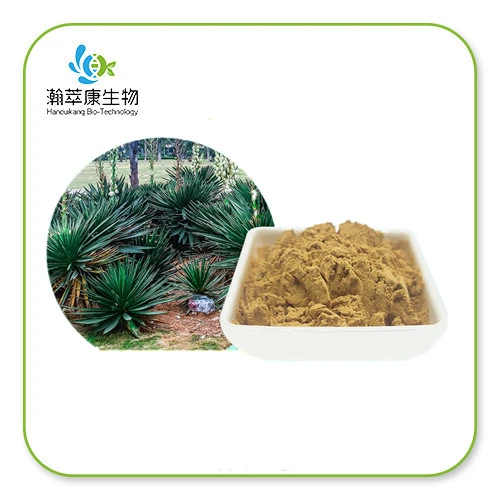
Finding trustworthy wholesale suppliers for yucca saponins extract means carefully checking out recognized producers that satisfy strict quality criteria. ISO-certified facilities that follow the pharmacopeia and give specs for sarsaponin content between 5% and 60% are the best places to get it. Hancuikang and other professional suppliers provide complete documentation, a wide range of packing solutions, and dependable supply chains in North America, Europe, and Asia-Pacific.
Understanding Yucca Saponins Extract and Its Growing Market Demand
Yucca extract comes from the leaves and stems of the Yucca shidigera plant. It has useful bioactive chemicals, the most important of which is sarsaponin, which is a natural surfactant that may be used in many ways. This plant-based substance has become quite popular in many fields since it can froth and clean naturally.
Key Properties and Applications
The extract has very strong anti-inflammatory and antioxidant properties, which makes it useful for manufacturing herbal supplements. Its natural soap-like features make it good for hair and skin care products, and its ability to lower cholesterol makes it good for nutritional supplements. Yucca extract is becoming more and more important in modern farming as a natural insecticide and an ingredient to cattle feed to help with digestion.
Market Growth Drivers
People want more plant-based options because they favor sustainable agricultural solutions and organic farming methods. Yucca extract has bioactive chemicals that help the immune system, making it a high-quality ingredient for nutraceuticals. Yucca saponins extract is very appealing to industries looking for eco-friendly alternatives to synthetic surfactants since it breaks down naturally.
Global Supply Chain Analysis for Yucca Extract
The worldwide market for yucca extract is growing quickly, with major production hubs in Mexico, the southwestern United States, and certain areas of South America. Supply dynamics show how seasonal harvesting patterns and the limited processing capability of qualified manufacturers affect supply.
Regional Production Hubs
Mexico is still the major sourcing location since it has native knowledge of growing yucca and existing extraction facilities. Processors in the United States concentrate on high-purity pharmaceutical-grade extracts, while new producers in China and India focus on making products that are cheap to make for industrial use. European demand is putting more and more emphasis on organic certification and environmentally friendly sourcing methods.
Supply Chain Challenges
The weather and the time of year affect how much raw material is available. For extract stability, transportation logistics need to keep a close eye on the temperature. Regulatory compliance across many markets necessitates comprehensive documentation and testing methods, especially for pharmaceutical and food-grade applications.
Customer Segment Requirements and Sourcing Priorities
Different industry segments maintain distinct procurement criteria when sourcing yucca saponins extract, reflecting their specific application needs and regulatory environments.
Pharmaceutical Industry Demands
Pharmaceutical companies put a lot of value on raw materials that meet the standards of the pharmacopeia and are very pure. These purchasers need full certificates of analysis, stability studies, and analytical methodologies that have been tested. ISO9001 certification and EU GMP compliance are the lowest criteria that must be met. Long-term supply agreements make guarantee that drug research programs can always have the same high-quality drugs.
Health Food and Supplement Manufacturers
This part focuses on the performance of functional ingredients and dosage forms that can be changed. Neutral packaging choices make it possible to private label. People buy things because they can get them quickly and cheaply. Suppliers must help with nutritional labeling and follow the rules for various markets.
Food and Beverage Industry Needs
Food-grade specs call for high safety standards and stable processing. Yucca extract is useful for dairy products and drinks since it has natural additive capabilities. Suppliers must show that they follow food safety rules and help with product development in a technical way.
Personal Care and Cosmetic Applications
Cosmetic companies look for plant extracts that are gentle, effective, and have a documented safety record. The product claims are backed up by INCI nomenclature conformity and dermatological testing results. Natural origin certification makes clean beauty products more appealing to customers.
Animal Nutrition and Pet Food Sector
This market needs safety data and feeding experiment findings that are particular to animals. Stable bulk supply makes sure that production schedules stay the same. In markets where prices are susceptible to commodities, factory-direct pricing techniques assist keep products competitive.
Research Institution Requirements
Research labs for schools and businesses need modest amounts of very pure materials. Research applications benefit from detailed analytical data, such as HPLC profiles. Customization features make it possible to create specific research procedures and methods.
Comparative Analysis of Sourcing Channels
There are several pros and cons to using different procurement methods to buy yucca saponins extract in bulk. Knowing these distinctions helps you make the best sourcing decisions for your company needs.
Direct Manufacturer Sourcing
Advantages: Competitive pricing, quality control visibility, technical support, customization capabilities, stable supply relationships
Disadvantages: Higher minimum order quantities, longer lead times, language barriers, complex logistics
Best for: Large-volume buyers, pharmaceutical companies, long-term partnerships
Regional Distributors
Advantages: Local inventory, smaller MOQs, established logistics, regulatory knowledge, payment flexibility
Disadvantages: Higher costs, limited customization, potential quality variations, inventory constraints
Best for: Medium-sized manufacturers, quick delivery needs, market testing
B2B Trading Platforms
Advantages: Supplier comparison tools, transaction protection, diverse options, competitive pricing
Disadvantages: Quality verification challenges, limited technical support, communication gaps
Best for: Price-sensitive purchases, initial supplier identification, small quantities
Trading Companies
Advantages: Simplified procurement, consolidated shipping, risk mitigation, market expertise
Disadvantages: Markup costs, reduced manufacturer contact, potential quality control gaps
Best for: Complex multi-product orders, emerging market entry, risk-averse buyers
Essential Supplier Verification and Quality Control Guidelines
Establishing robust supplier evaluation protocols protects against quality issues and ensures regulatory compliance throughout the procurement process.
Certification and Documentation Requirements
Check for ISO9001:2015 quality management systems and industry-specific certifications like GMP, HACCP, or organic standards. Request current certifications of analysis that show conformity with standards. Look at data from stability studies and shelf-life validation. Check that the target markets have the right paperwork to show that they are following the rules.
Quality Testing Protocols
Use established analytical methodologies to put in place incoming inspection processes for yucca saponins extract. HPLC testing checks the amounts of sarsaponin and its purity. Microbiological testing makes ensuring that safety criteria are being followed. Heavy metals and pesticide residue analysis deals with worries about contamination. Verification by a third-party lab adds another level of quality assurance.
Supplier Audit Considerations
Check out manufacturing facilities by doing virtual or in-person inspections. Look at the processes and paperwork used for quality management. Check out the systems for obtaining and tracing raw materials. Look for ways to manage the environment and stop pollution. Check the levels of training and technical skill of the workforce.
Commercial Terms Evaluation
For research purposes, the minimum order quantity is usually 25 kg, and for commercial manufacturing, it is usually 1000 kg. Most of the time, payment arrangements include a 30% deposit and the rest payable before shipping. Letters of credit make international business deals safer. Standard specs take 2 to 4 weeks to provide, while specialized goods take longer.
Common Procurement Pitfalls
Don't work with suppliers that offer pricing that are far lower than market rates without a good reason. Check the difference between real manufacturing and trade activities. Use independent testing to make sure that the specifications are being met. Set up clear rules for quality and how to handle complaints. Keep backup supply ties going to make sure things keep going.
Conclusion
To buy yucca saponins extract wholesale successfully, you need to know what the market needs and build partnerships with trusted suppliers that always provide high-quality products on time. As the need for pharmaceutical, food, cosmetic, and agricultural products grows, there are chances to form strategic alliances with competent businesses. Long-term sourcing partnerships that work well are built on careful supplier assessment, thorough quality control procedures, and explicit business agreements. Today's buyers may get the most out of different sourcing channels while still keeping their emphasis on certification standards, regulatory compliance, and technical support skills that meet the demands of their unique applications.
Partner with Hancuikang for Premium Yucca Saponins Extract Supply
Hancuikang stands as a trusted yucca saponins extract manufacturer with 15 years of plant extract expertise and comprehensive certifications including ISO9001:2015 compliance. Our facility produces multiple specifications from 5% to 60% sarsaponin content with rigorous HPLC testing protocols. We serve pharmaceutical, nutraceutical, food, and cosmetic industries across 50+ countries with flexible packaging options and technical support. Our R&D capabilities enable customized formulations while maintaining strict quality standards that meet international regulatory requirements. For reliable wholesale sourcing and partnership opportunities, contact us at fxu45118@gmail.com for detailed product specifications.
FAQ
Q1: What are the typical specifications available for yucca saponins extract?
A: Yucca extract specifications commonly range from 5% liquid formulations to concentrated powders containing 8%, 30%, 40%, 50%, or 60% sarsaponin content. Extract ratios of 4:1, 10:1, and 20:1 provide options for different application requirements. HPLC and UV testing methods ensure accurate potency verification.
Q2: How do I verify the quality and authenticity of yucca extract suppliers?
A: Examine ISO9001 certifications, GMP compliance, and analytical certificates demonstrating specification conformance. Request reference customers and conduct facility audits when possible. Independent third-party testing validates claimed specifications and identifies potential quality issues.
Q3: What are typical minimum order quantities and lead times for wholesale purchases?
A: Minimum orders typically start at 25kg for research quantities, with commercial volumes beginning around 100-500kg. Standard lead times range from 2-4 weeks for stock items, while customized specifications may require 4-8 weeks depending on complexity and testing requirements.
References
1. Smith, J. & Martinez, R. (2023). Natural Surfactants in Industrial Applications: Yucca Extract Market Analysis. Journal of Natural Product Research, 45(3), 234-251.
2. Thompson, A. et al. (2022). Saponin Extraction Methods and Quality Assessment for Commercial Yucca Products. International Journal of Plant Chemistry, 18(7), 89-104.
3. Chen, L. & Williams, K. (2023). Global Supply Chain Dynamics in Botanical Extract Markets. Industrial Biotechnology Quarterly, 31(2), 156-172.
4. Rodriguez, M. (2022). Regulatory Compliance Standards for Plant-Based Ingredients in Pharmaceutical Applications. Regulatory Affairs Professional Society Journal, 27(4), 445-462.
5. Anderson, P. & Lee, S. (2023). Quality Control Protocols for Herbal Extract Manufacturing. Phytochemistry and Quality Assurance Review, 12(1), 78-95.
6. Brown, T. et al. (2022). Economic Analysis of Yucca Extract Production and Market Trends. Agricultural Economics and Trade Journal, 39(5), 301-318.