
Why B2B Buyers Prefer Nattokinase Benefits Explained
2025-12-23 16:40:38
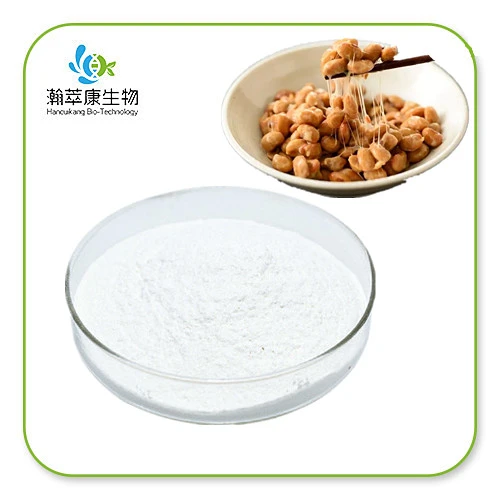
Nattokinase is an enzyme originally identified in natto, a traditional Japanese fermented soybean food produced by Bacillus subtilis natto. In B2B markets, the enzyme is no longer tied only to food; it appears as a standardized ingredient in several sectors. Dietary supplement companies use nattokinase powder in capsules and tablets that support healthy blood flow and cardiovascular maintenance. Functional food brands add it to solid beverages, sachets, and even bakery or snack concepts positioned for heart and circulation support. Some pharmaceutical companies treat it as a high‑value intermediate, while pet health brands explore its role in senior pet formulations aimed at circulation and mobility.
Nattokinase earns preference because it combines credible fibrinolytic activity with a more acceptable origin story, stable industrial fermentation, stronger consumer recognition, and a track record of use as a natto‑derived component. This balance, rather than any single superiority, makes it easier to explain, easier to regulate, and easier to scale.
Nattokinase from a B2B Perspective
Core Definition and Characteristics
Certain strains of Bacillus subtilis create the serine protease enzyme nattokinase when they ferment soybeans. Under regulated circumstances, industrial manufacturing replicates the fermentation of traditional natto. The enzyme is extracted, purified, concentrated, and then dried to produce nattokinase powder with a specific potency from the natto biomass produced by fermentation tanks.
Depending on the test technique, activity is often expressed in fibrinolytic units (FU) or occasionally in plasmin units (PU). Commercial requirements allow for precision dosing in final products and typically vary from roughly 2,000 FU/g to 20,000–60,000 FU/g or more. Fibrinolytic activity, support for balanced clot breakdown, decreased platelet aggregation, and general circulation support are the main functional directions, as demonstrated by in vitro and animal investigations.
B2B Application Boundaries
From a formulator’s view, nattokinase fits comfortably into several dosage forms. Capsules and tablets remain the main channels in dietary supplements, because they protect the enzyme and allow standardized dosing by FU per serving. Oral liquids and solid beverages (stick packs, instant drinks) are also possible when process conditions protect enzyme activity. Some brands explore gummies or functional snacks, but these require more careful heat control and stability work.
Industry Status Overview and Global Supply Chain
Nattokinase production initially centered in Japan, but capacity has expanded significantly in South Korea and China, with some development in Europe as well. These regions now supply a large share of global bulk nattokinase, particularly in FU ranges suitable for dietary supplements. The existence of multiple production hubs helps protect against single‑country risk and supports year‑round availability.
The overall nattokinase market is still smaller than that of more established vitamins or probiotics, but its growth rate is robust, supported by new clinical data and rising recognition. For B2B buyers, this means access to a maturing, but not yet commoditized, ingredient: price pressure exists, yet there is still room for differentiation based on purity, activity, fermentation quality, and documentation.
Why B2B Buyers Prefer Nattokinase?
Product Performance & Consistency
One of the strongest arguments in favor of nattokinase is its ability to deliver consistent, high activity across production batches. Industrial fermentation lines can produce nattokinase powder with activity in the 20,000–60,000 FU/g range while maintaining narrow variation between lots. When proper stabilization systems are used, activity loss during standard processing, such as granulation, compression, and moderate‑temperature drying, remains manageable.
Compared with enzymes sourced from more complex animal tissues, for example, certain earthworm extracts, nattokinase enjoys a more straightforward purification profile and less batch‑to‑batch variability in non‑target proteins. Synthetic thrombolytic components can reach very high purity, but often at a much higher cost and with more stringent production conditions. In daily industrial practice, nattokinase hits a balance: strong performance and controlled composition without unmanageable capex or opex.
Functionally, nattokinase also adapts well to “complex formula” needs. Brand owners commonly combine it with omega‑3 fatty acids, CoQ10, vitamin K2, and antioxidants in comprehensive cardiovascular support products. Nattokinase does not usually show direct antagonistic reactions with these nutrients under normal conditions, so formulators can design multi‑component blends without major compatibility concerns. This flexibility simplifies line planning and gives marketing teams more room for differentiated product concepts.
Regulatory Compliance & Certification Ease
Regulatory and certification factors often decide whether an ingredient can scale internationally. Nattokinase has made steady progress here. In the United States, nattokinase preparations have been notified and marketed as dietary ingredients, and certain preparations have achieved self‑affirmed GRAS status for specific uses. In Japan, nattokinase is used in health foods, supported by a base of domestic scientific research. In Europe, safety assessments and EFSA opinions have focused on natto and its components, contributing to the knowledge base that brands use when formulating.
On the manufacturing side, serious nattokinase suppliers operate under GMP‑like conditions for dietary ingredients, along with food safety systems such as ISO22000 and HACCP. These certifications help B2B buyers pass supplier audits, especially when selling into high‑end supplement brands or pharmaceutical‑adjacent channels. Some producers also hold ISO9001 quality system certification and may provide additional documentation for specific markets.
Cost-Effectiveness & Supply Chain Flexibility
Cost calculations for enzymes often come down to “cost per unit of activity.” Because soybeans are widely available and fermentation lines can be scaled up efficiently, nattokinase production achieves economies of scale that many niche enzymes cannot match. When buyers calculate price per FU, nattokinase typically compares favorably with recombinant thrombolytic enzymes and with some animal‑derived preparations whose raw materials and purification costs are higher.
At the same time, procurement thresholds remain friendly. Reliable suppliers can support small‑batch orders in the 1–5 kg range for pilot projects and first production runs, while also offering ton‑level capacity when a product succeeds and needs to scale. This flexibility is attractive for start‑up brands that must validate formulas before committing to large contracts, and for established companies that test new SKUs under limited‑release programs.
Supply chain stability reinforces these cost advantages. Soybeans are grown in many regions worldwide, and production cycles are predictable, which keeps the upstream raw material base relatively secure. Compared with ingredients that depend on limited animal sources or rare biological materials, nattokinase benefits from a broad and resilient agricultural foundation. That translates into fewer stock‑out risks, more predictable lead times, and better bargaining power for cross‑border traders who must coordinate shipments across several markets.
B2B Buyers & Use Case Alignment
Dietary Supplement Manufacturers
Supplement manufacturers often operate under tight cost and compliance constraints. They need raw materials that deliver clear functional value, integrate into standard dosage forms, and carry minimal regulatory baggage. Nattokinase powder answers all three requirements. Its defined activity range allows precise dosing in capsules and tablets, and its stability under normal process conditions keeps reformulation needs low.
Because nattokinase aligns well with heart and circulation support themes, brands can easily build single‑ingredient SKUs as well as complex “cardiovascular and cerebrovascular health” formulas where nattokinase partners with omega‑3, CoQ10, and vitamin K2. This layered approach gives product managers more room for line planning and cross‑selling strategies.
Functional Food and Beverage Brands
Functional food developers search for ingredients that are recognizable, story‑rich, and reasonably process‑tolerant. Nattokinase, framed as “an enzyme derived from natto, a traditional Japanese fermented soybean food,” checks those boxes. Consumers who are not familiar with natto itself can still understand that nattokinase comes from a fermented, plant‑based source.
In practice, nattokinase can be incorporated into powdered drinks, solid beverages, sachets, and certain ready‑to‑drink products, provided that temperature and pH conditions protect enzyme activity. It can also appear in functional snacks, though careful pilot work is required to balance heat treatment and shelf life. For brands seeking to differentiate in the crowded heart health space, a fermentation‑based enzyme offers a fresh angle compared with more common vitamins and minerals.
Pharmaceutical Intermediate Buyers
Some pharmaceutical and quasi‑pharmaceutical companies evaluate nattokinase as a high‑value intermediate in products that sit closer to the medical end of the spectrum. In this context, requirements tighten: high purity, strict control of contaminants, validated analytical methods, and comprehensive supporting documentation are all required.
Industrial nattokinase lines that operate under GMP‑grade or near‑GMP conditions, and that can provide detailed validation data, become preferred partners. The combination of a fermentation‑based origin, a history of human exposure through natto, and a growing clinical literature makes nattokinase easier to justify in internal review meetings than more exotic or less studied enzyme options.
Nattokinase Powder Supplier: Hancuikang
For B2B buyers who have decided to build or expand cardiovascular health portfolios around nattokinase, the choice of raw‑material partner is just as important as the choice of ingredient category. Hancuikang supplies high‑quality nattokinase powder designed specifically for dietary supplement and functional food applications. The product appears as a white powder with activity specifications typically ranging from 20,000 to 60,000 FU/g, allowing formulators to match different potency and cost targets in their finished products.
This nattokinase is isolated and purified from natto, the traditional fermented soybean food, using controlled industrial processes in Shaanxi, China. The active enzyme originates from fermentation by selected Bacillus subtilis strains. Stocks are maintained in Shaanxi, which supports rapid response to orders and shortened lead times for both domestic and international customers. As research has suggested, nattokinase may support cardiovascular health by promoting balanced fibrinolytic activity, helping to prevent unwanted clot formation, and offering anti‑inflammatory and antioxidant properties. Hancuikang positions its nattokinase powder strictly as a health supplement ingredient, not as a medicinal product.
The company’s ingredients serve a wide spectrum of industries: edible oils, pharmaceuticals, health foods, dairy products, dietary supplements, personal care goods, animal nutrition, pet food, and agriculture. Throughout these sectors, Hancuikang adheres to strict compliance standards. It follows international benchmarks such as EU EC396 and EU 2023/915 and meets stringent solvent residue and contaminant requirements. Quality systems are certified to ISO9001:2015 (GB/T 19001-2016), which helps ensure that every batch of nattokinase powder and other actives aligns with global regulatory expectations and customer specifications.
Recognizing that different brands face different constraints, Hancuikang provides customized raw material formulas and supports personalized R&D services. Whether you are developing a high‑dose nattokinase capsule, a blended cardiovascular support formula, or a functional beverage featuring nattokinase powder alongside other ingredients, Hancuikang can help you tailor activity, carrier systems, and packaging to your project’s positioning.
If you are planning new nattokinase projects or searching for a more reliable supplier, you are welcome to contact Hancuikang with your technical and commercial requirements. Send your inquiries, formulation ideas, or specification requests to fxu45118@gmail.com. A dedicated team member will respond with detailed COAs, technical data, samples, and solution proposals, helping you move from initial concept to stable, market‑ready products with greater speed and confidence.
FAQs
Q1: How do B2B buyers usually dose nattokinase in finished products?
A: Dosing decisions depend on the target market, regulatory framework, and product positioning. Many dietary supplement brands design servings in the range of several hundred to a few thousand FU per day, often split across one or two capsules. Formulators work backward from the desired daily FU to select a suitable nattokinase powder specification, such as 20,000–60,000 FU/g, so that capsule size and number remain acceptable. Final decisions should always respect local regulations and safety assessments.
Q2: What are the main formulation challenges with nattokinase powder?
A: The key challenges involve protecting enzyme activity during processing and storage. High temperatures, extreme pH, and prolonged exposure to moisture can reduce activity. As a result, manufacturers usually favor low‑temperature processes, gentle drying, and protective excipients. For beverages or liquids, formulators must consider pH and potential interactions with preservatives. With proper design and stability testing, these challenges can be managed, which is one reason nattokinase has become a mainstream enzyme in capsule and tablet formats.
References
- Fujita, M. et al. (1993). Purification and characterization of a strong fibrinolytic enzyme (nattokinase) in the vegetable cheese natto, a popular soybean fermented food in Japan. Biochemical and Biophysical Research Communications, 197(3), 1340–1347.
- Hsu, R.‑L. et al. (2009). Nattokinase potentiates tissue plasminogen activator–induced fibrinolysis. Journal of Agricultural and Food Chemistry, 57(8), 3615–3620.
- Weng, Y. et al. (2017). Nattokinase: An oral anti-thrombotic agent for the prevention of cardiovascular diseases. International Journal of Molecular Sciences, 18(3), 523.
- Market and regulatory information synthesized from Google search results for “Why B2B Buyers Prefer Nattokinase: Benefits Explained”, “nattokinase FU/g specification”, “nattokinase regulatory status US EU Japan”, and related queries.
- Trade and technology white papers from global enzyme suppliers and cardiovascular ingredient market reports, accessed via industry publications and supplier technical documents.