
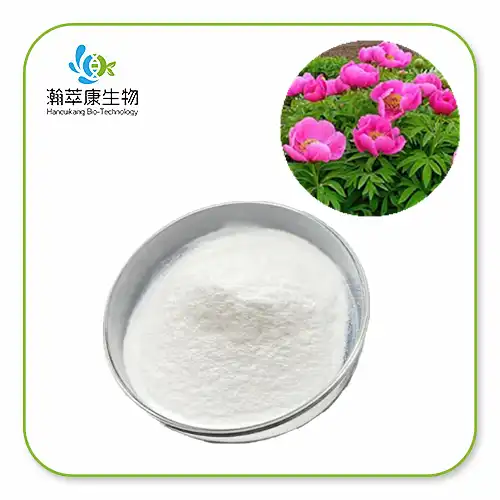

Paeonol (Moutan Bark Phenol)
CAS: 552-41-0, Molecular Formula: C₉H₁₀O₃, Molecular Weight: 166.18 It is a signature active phenolic substance derived from Cortex Moutan (dried root bark of Paeonia suffruticosa, Ranunculaceae) and Cynanchum paniculatum. It is NOT a hormone.
1. Physicochemical Properties
Appearance: White to slightly yellowish acicular crystals or crystalline powder with a characteristic odor and slightly pungent taste. Chemical Name: 2-hydroxy-4-methoxyacetophenone Melting point: 48–52℃; Steam distillable; Prone to oxidation under light, store in light-shielded, airtight containers. Solubility: Freely soluble in ethanol and methanol; soluble in hot water, practically insoluble in cold water. Characteristic UV absorption: 274 nm and 314 nm, commonly used for content determination.
2. Source
Natural extraction sources:
Cortex Moutan: Root bark of Paeonia suffruticosa. Paeonol is the quality control marker component of Cortex Moutan.
Cynanchum paniculatum: Whole herb of Asclepiadaceae plant; paeonol is its major active ingredient. It can also be chemically synthesized for use as API and cosmetic raw material.

3.Paeonol Specification
| Item | Specification |
|---|---|
| Appearance | White to slightly yellowish needle crystals / crystalline powder with characteristic aromatic odor |
| HPLC Assay | ≥99.0% (Cosmetic Grade) |
| Melting Point | 48~52℃ |
| Loss on Drying | ≤0.5% |
| Residue on Ignition | ≤0.1% |
| Heavy Metals (Pb, As, Cd, Hg) | ≤10 ppm |
Residual Solvents | Complies with pharmacopeial standards |
Microbial Limit | Complies with pharmacopeial standards |
| Particle Size | Pass through 80 mesh sieve completely |
| Recommended Dosage in Cosmetics | 0.01%~0.2%, generally not exceeding 1% as upper limit |
| INCI & Function Claim | Anti-inflammatory, Antibacterial, Antioxidant, skin conditioning, antioxidant, soothing |
| Storage | Protected from light, sealed, stored in cool and dry place; avoid light to prevent oxidative discoloration |
4.Pharmacological Activities (Basic Research & Clinical Application)
✅ Anti-inflammatory & anti-allergic: Stabilizes mast cells, reduces release of histamine and inflammatory factors, inhibits type I, II, III and IV hypersensitivity reactions; relieves itching and redness topically.
✅ Analgesic, antipyretic & sedative: Applied for headache, myalgia, neuralgia and fever; possesses mild sedative and hypnotic effects.
✅ Cardiovascular effects: Inhibits platelet aggregation, antithrombotic, improves vascular endothelium and exerts antioxidant effects; researched for atherosclerosis.
✅ Neuroprotective effect: Antioxidant and alleviates neuroinflammation. Animal studies indicate potential benefits for stroke and neurodegenerative diseases (still under research, not for direct clinical use). ✅ Others: Antibacterial and antioxidant; in-vitro anti-tumor studies exist (for research purpose only, cannot be used as anti-cancer medicine).
5. Commercial Preparations & Applications
Paeonolumhas ataractic effect against muscle tissue and skin, so it can substitute anti-irritant and anti-inflammatory medicine used in skin and mouth. Also it has unique natural mint smell, so as to remove peculiar mouth smell. And it also can reduce pain and toothache when brushing. Dispelling wind and arresting pain. It can be used as pharmaceutical material of preparations for myalgia, rheumatic pain, neuralgia coetaneous pluribus.In cosmetics; Paeonol can whiten the skin, reduce the pigment deposited in the skin, eliminate silt and spot, anti-inflammatory, swelling and pain relief, anti-allergy, anti-virus and other effects.
Paeonol Ointment (Class A OTC, most common)Ingredients: Paeonol + clove oil; hormone-free. Indications: Eczema, dermatitis, skin pruritus, swelling caused by insect bites; also used for allergic rhinitis and cold prevention (small amount applied intranasally). ❗ Contraindications & Precautions: Not for broken, eroded or oozing skin; avoid contact with eyes and mucous membranes; use cautiously in pregnant women.
Paeonol Plaster: Promotes blood circulation and relieves pain, for sprains, contusions and osteoarthritis swelling & pain.Paeonol Tablets: Antipyretic and analgesic, for headache, neuralgia, rheumatic pain, etc.
Cosmetic industry: Cosmetic raw material (antioxidation, soothing, pigment-improving research available; must comply with cosmetic regulations).

6. Safety & Precautions
Occasional local burning sensation, erythema or aggravated itching after topical use, which indicates allergic irritation. Discontinue use immediately and rinse thoroughly. Contraindicated in patients with paeonol allergy.
It does not produce hormone-related side effects (no skin atrophy or hormone dependence), but it is not completely non-irritating.
Oral administration: Rapid metabolism in vivo. Oral formulations are pharmaceuticals and shall not be taken long-term without medical advice.
Stability limitation: Phenolic hydroxyl group is susceptible to oxidative discoloration. Raw materials and finished products must be protected from light.
7. Brief Comparison (Paeonol vs Glucocorticoid Ointment)
| Item | Paeonol | Glucocorticoid Ointment (e.g. Hydrocortisone Butyrate) |
|---|---|---|
| Structure | Natural phenolic compound, non-steroidal, non-hormonal | Steroid hormone |
| Onset of action | Mild effect, slow onset | Strong anti-inflammatory effect, fast onset |
| Long-term topical use | No risk of hormone-induced skin atrophy / telangiectasia, but individual irritation may occur | Long-term use easily causes skin thinning, telangiectasia and pigment abnormality |
| Application scope | Chronic eczema, dermatitis, insect bite itching; forbidden on broken skin | Acute & chronic eczema, allergic dermatitis; treatment course under medical supervision |
8.FAQ's of paeonol Application: Health Care Products:
Q: How is paeonol typically used in health care products?
A: Paeonol acts as an active ingredient in a range of pharmaceuticals, health supplements, and cosmetics, contributing its anti-inflammatory, antibacterial, and antioxidant benefits to finished products.
Q: What benefits does paeonol offer when incorporated into formulations?
A: Paeonol provides notable anti-inflammatory, antibacterial, and antioxidant effects, which help enhance overall wellness and promote skin, joint, or immune health, depending on the application.
Q: When should paeonol be stored to maintain stability and efficacy?
A: Paeonol should be kept in sealed containers, away from light, in a cool and dry environment, which preserves its potency and assures a shelf life of 24 months.
Q: Where is paeonol most commonly sourced and manufactured?
A: This compound is largely exported and manufactured in China and supplied globally as pharmaceutical-grade material for diverse health product applications.
Q: What process ensures the safety of paeonol for health applications?
A: Every batch undergoes rigorous testing to comply with pharmacopeial standards for heavy metals, residual solvents, microbial limits, and loss on drying, guaranteeing safe use in sensitive formulations.
Q: How should paeonol be packaged for optimal preservation?
A: It is distributed in sealed drums or aluminum foil bags, which safeguard the compound from moisture and contamination, retaining its quality and stability throughout its shelf life.
9.Optimal Storage and Shelf Life
Paeonol remains stable under the recommended storage conditions-cool, dry, and shielded from light. Provided in sealed containers, its efficacy and safety are preserved for 24 months, making it practical for manufacturers and suppliers needing consistent performance in their products.